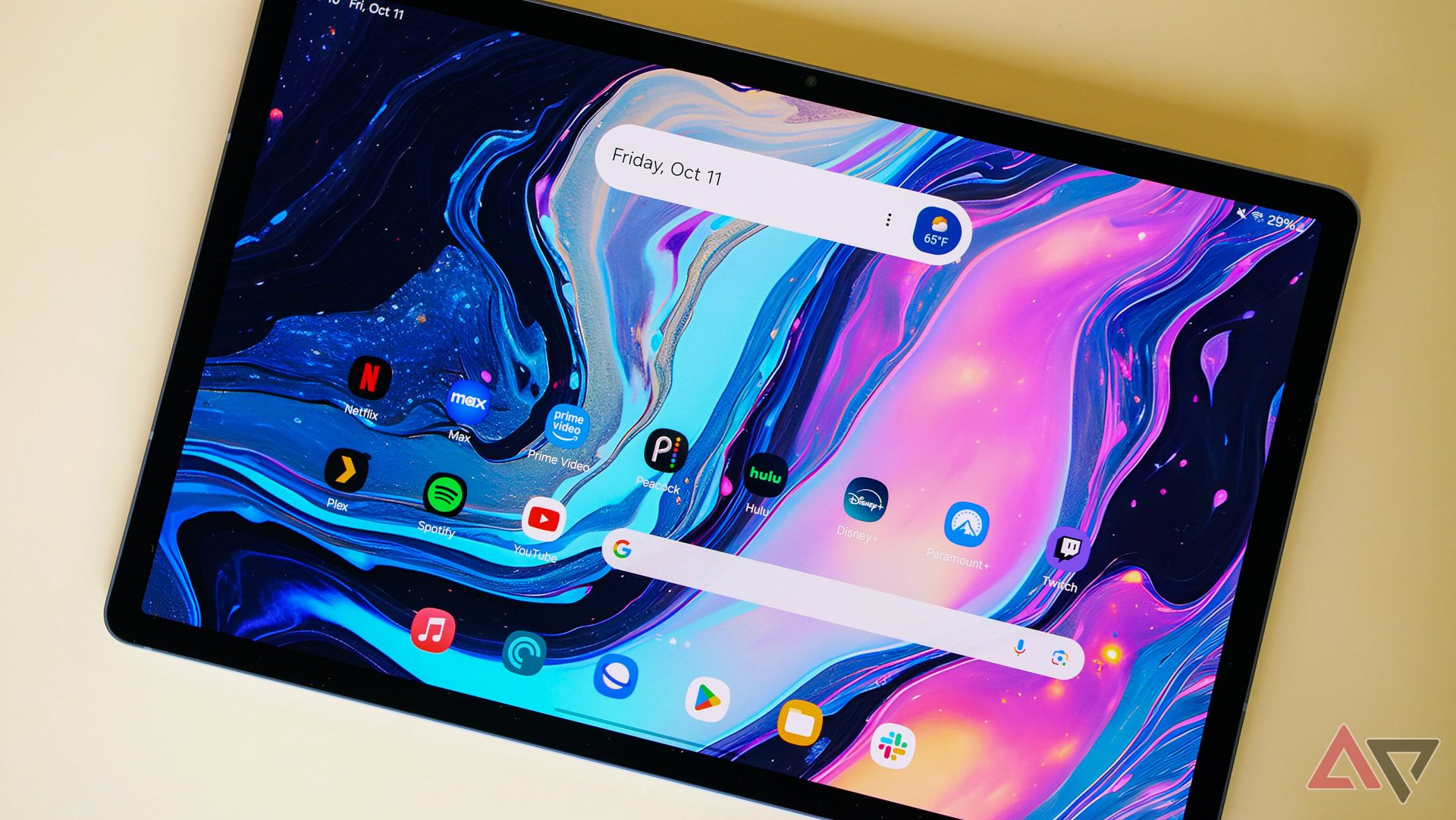
I am going to admit to being one thing of a pill skeptic. Do not get me incorrect — since I acquired my first iPad approach again in 2012, I’ve virtually all the time had a pill inside attain. From selecting up an Nvidia Protect Pill in school to reviewing a number of Galaxy Tabs for Android Police, I’ve all the time appreciated an enormous, moveable show for watching motion pictures or searching the net. However in terms of working, be it enhancing pictures, recording podcasts, or writing a easy information publish, I’ve wanted a full-fledged PC to get it performed.
That is in all probability why I’ve all the time scoffed at Samsung’s DeX mode. For those who’re unfamiliar, DeX is the non-obligatory desktop expertise included in One UI. On Galaxy smartphones, DeX permits you to connect with a monitor and numerous peripherals to create a proto-desktop PC proper out of the machine in your again pocket. On Galaxy tablets, nonetheless, DeX is successfully a second, non-obligatory launcher, accessible proper from the short settings menu.
I have been utilizing the Galaxy Tab S10+ as a secondary machine since I reviewed it final yr. Its 12.4-inch show has all the time been simply giant sufficient to get a variety of my most elementary duties performed with out breaking a sweat. Writing an editorial, responding to emails, curating my to-do record — it is the right house for all of that. Nonetheless, it took me fairly some time to heat as much as the likelihood that the Tab S10+ greater than only a informal e mail machine, and admittedly, I’ve DeX mode to thank for that revelation.

Associated
Evaluate: I really like Samsung’s Galaxy Tab S10+, however it’s a tough pill to suggest
A lesson in OS limitations
While you’re trapped on a aircraft, house is every little thing
And the Galaxy Tab S10+ makes much more sense than a laptop computer
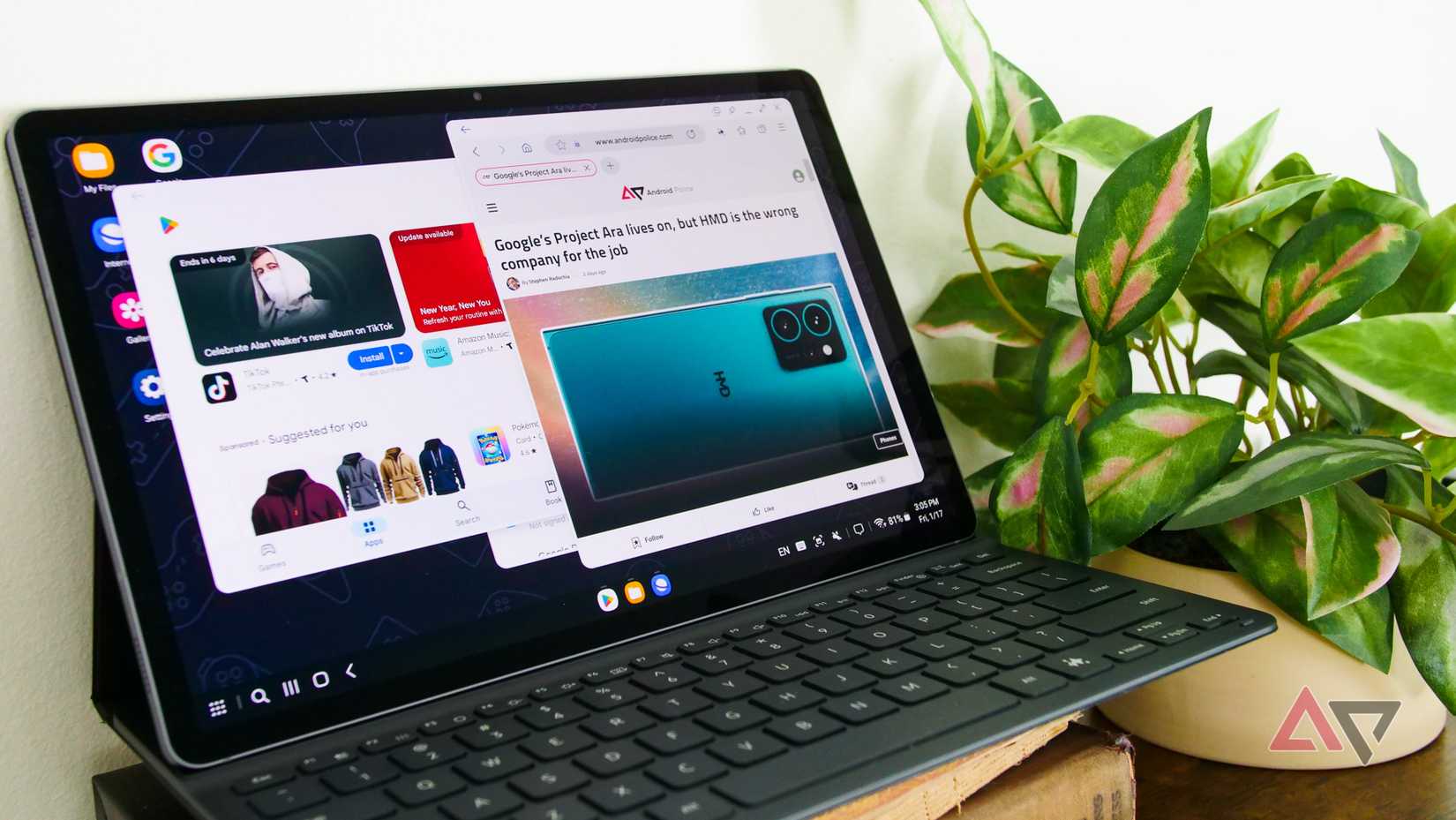
It began again in October, once I flew out to Hawaii to cowl Qualcomm’s Snapdragon Summit and the announcement of the Snapdragon 8 Elite chipset. Masking a brand new SoC is not essentially tough, however it is time-consuming. The sheer quantity of documentation, belongings, and different assets you must dig by to get a really feel for what makes a brand new piece of silicon particular — and higher than its predecessor, particularly — is usually a little overwhelming, particularly on a small show. Usually, I would not have thought twice about utilizing a pill for one thing like this, however generally, a scenario requires drastic measures.
On this case, that scenario was, properly, being on a aircraft. I needn’t inform anybody that house is extraordinarily restricted in coach. Whereas I really like my laptop computer — an Asus ROG Zephyrus G14 from a few years in the past — absolutely opening its show requires slightly extra room than I can afford, particularly if the particular person in entrance of me reclines their seat. Normally, the shortage of a devoted trackpad and the locked angle of Samsung’s folio keyboard limits my productiveness, however on a aircraft, it is really excellent, giving my arms sufficient room to comfortably lengthen.
So, as I set off on the longest leg of my journey — an eight-hour flight from Dallas to Maui — I took the pill out of my backpack and began writing. At first, every little thing went about in addition to you’d count on. I answered work emails, labored a bit on an earbuds evaluate that had fallen to the wayside, and eventually started to prep my Qualcomm protection.
And that is when the restrictions of Android actually began to indicate themselves.

How multitasking works by default in One UI.
See, for as versatile as One UI can really feel on giant display gadgets like tablets and foldables, it is nonetheless primarily designed to make use of one or two apps open without delay. On this case, I felt myself leaping between my draft weblog publish, a number of PDF recordsdata, my notes record in Google Preserve, and a group of screenshots. Frankly, it was overwhelming and sluggish, and I discovered it significantly irritating simply how a lot I missed home windows — the UI, not the working system. However that is the place DeX got here into play.
DeX helped to make up for Android’s big-screen shortcomings
Even with no devoted mouse

There is no doubt about it that DeX — at the least in basic mode, as I am utilizing it — is designed firstly for a mouse and keyboard, in the identical approach that Home windows 11 is designed for a mouse and keyboard. However like Microsoft’s OS, DeX is not essentially unusable with no cursor. In reality, as a result of DeX is a layer on high of Android, and you are still accessing Android apps, I might argue DeX is rather more finger-friendly than Home windows. And that made my resolution to show to my Tab S10+ on a aircraft that a lot smarter.
As a result of DeX permits you to function apps in home windows, I used to be in a position to hold a number of PDFs open at a time, open no matter photos I wanted proper in a gallery, and hold every little thing scattered round my desktop in numerous home windows only a faucet away. There was no swiping between recently-opened apps, no locked 2×2 grid of poorly-scaled UIs. Every part was on high of one another, a fast faucet away from being the middle level of my consideration. Identical to a pc needs to be.
From right here, my to-do record — just like the flight itself — was easy crusing. It did not matter if I used to be crammed into an uncomfortable seat for hours at a time. I used to be in a position to immerse myself in my work in a approach that any typical Android expertise, whether or not it’s One UI on a Tab S10+, OxygenOS on a OnePlus Pad 2, or Google’s launcher on the Pixel Pill, merely would not have allowed. Ultimately, my work was performed even earlier than I might anticipated, and I used to be in a position to kick my toes up and revel in an in-flight film.
As I hunched over my keyboard on my most up-to-date flight, I noticed simply how a lot I regretted leaving my Tab S10+ and DeX behind.
That is to not say I will be ditching a standard laptop computer for a pill any time quickly, in fact. Whereas I am thrilled that Android — with the facility of DeX — helped make my writing expertise that rather more snug in a cramped surroundings, it isn’t my common workspace. In my residence workplace, surrounded by a big monitor, a mechanical keyboard, and sufficient house to sprawl out, I am all the time going to be extra productive. And that is earlier than accounting for instruments like Lightroom and Audition, each of which I rely on always for my job.
Nonetheless, it is made me rethink how I pack for work journeys. Not too long ago, on my journey to CES — the precise journey that impressed me to put in writing this piece — I made the choice to go away my pill at residence, figuring my laptop computer was greater than sufficient for the job. However as I hunched over my keyboard, making an attempt to complete my OnePlus 13 evaluate earlier than the aircraft touched down in Las Vegas, I noticed simply how a lot I regretted leaving my Tab S10+ behind. DeX is that good, and as I put together to journey for AP within the close to future, you may guess I will be making house in my bag.
Regardless of the future holds for Android, DeX needs to be an inspiration
Google may be taught a lesson or two

It is also given me hope for the way forward for Android on massive screens. If Google actually is seeking to merge Chrome OS and Android in some capability, because the rumor mill has urged in latest months, DeX might be the blueprint to success. In any case, Android may be a superb — nice, even — platform for productiveness, for getting work performed on the go, however Google hasn’t absolutely allowed it to stay as much as this potential. Instruments like DeX have come a great distance in making that dream a actuality, however nothing’s excellent. A real inventory try at a robust desktop mode for all of Google’s cellular gadgets may make on-the-go computing like this rather more of a actuality.

Associated
5 methods Google migrating Chrome OS to Android is an efficient factor
Why the ChromeOS to Android changeover is an efficient factor for customers