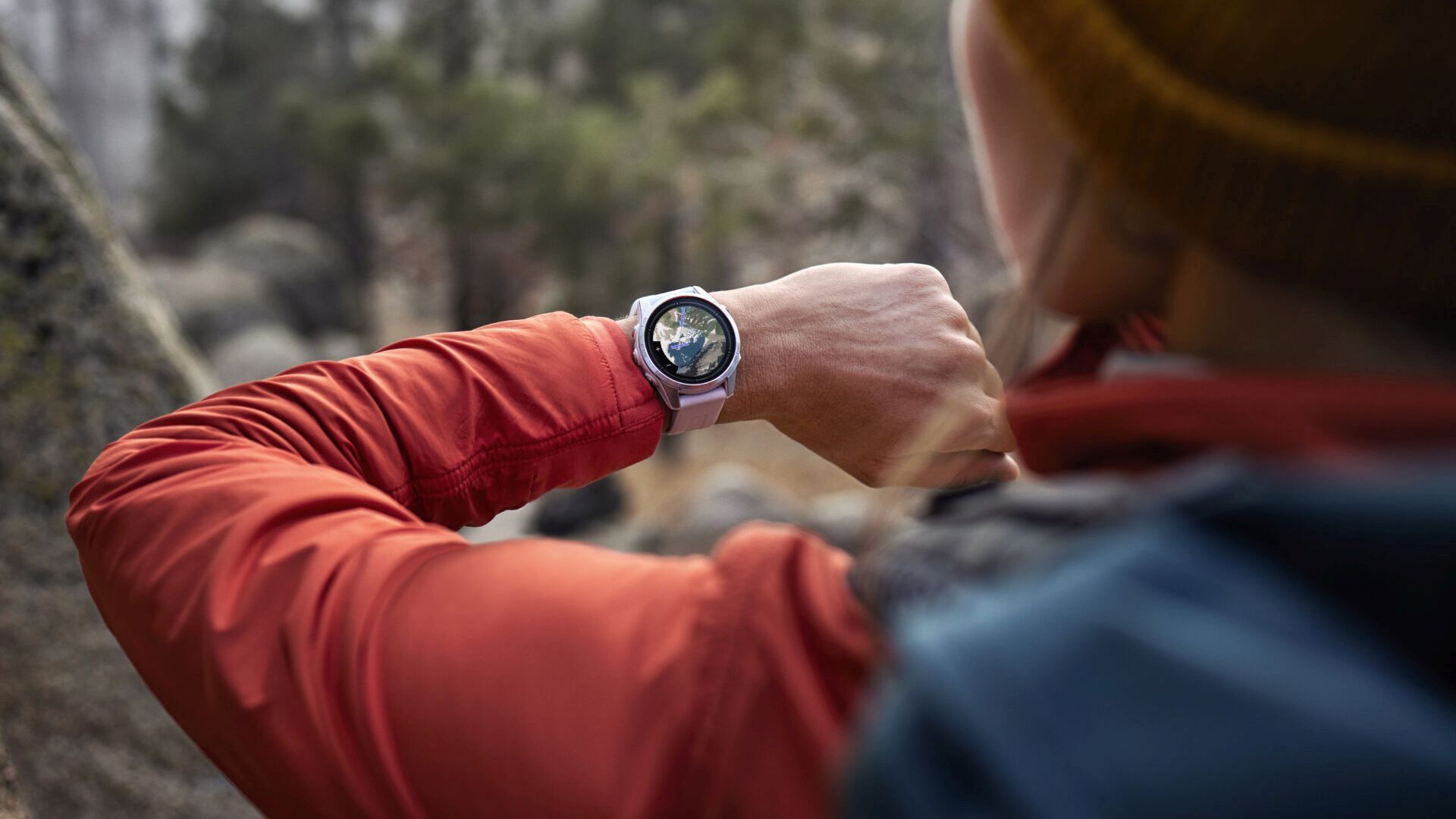
Garmin watches have astronomical battery life, typically lasting weeks, relying on the sequence. The life expectancy of those watches normally retains as much as 80% charging capability after a couple of years of use. Relying on the situations and charging remedy, this may be accelerated (or de-accelerated). The battery life is spectacular, and it places Put on OS watches to disgrace. However that is primarily due to how Garmin builds their watches and focuses on supposed use. We have damaged down exactly why Garmin batteries final a lot longer than a premium smartwatch utilizing Put on OS.

Associated
Find out how to obtain a coaching plan in your Garmin watch
Begin coaching on your subsequent marathon
Why are Garmin watches recognized for having distinctive battery life?
It is a mixture of things that offers Garmin the rep it has for why these watches final so long as they do. Garmin watches has optimized software program and specialised {hardware}. These watches do not have a heavy working system and are tailored to handle energy consumption.
The software program additionally gives fail-safes that optimize these watches’ batteries based mostly on customizable settings. For instance, toggling off At all times on Show and reducing the show brightness and sensor utilization will prolong the battery life. You too can use Battery Saver mode to maintain it going for longer. That additionally means many of the basic practices and settings that assist keep battery life in Put on OS are additionally obtainable for Garmin watches.
Focused show expertise
One other consideration is the specialised {hardware} with Garmin shows. Some Garmin watches use a transflective show present in MIP shows (Reminiscence in Pixel). These shows make the most of a mixture of transmissive and reflective properties inside their screens. It makes it simpler for the show to work below brighter and low-light situations. It does this by altering between ambient gentle reflection but additionally utilizing a backlight when conditions name for it. The twin performance is how these watches save on energy, thus saving on battery.

Supply: newhavendisplay.com
One other issue for the MIP shows is how nicely it makes use of solar-charging expertise. The primary Garmin watch to show this was the Fenix 6X Professional Photo voltaic in 2019. It did this by making use of a semi-transparent photo voltaic panel over the display. The outer rings would lure daylight to transform it into photo voltaic vitality. This led to the Fenix 6X seeing a 10-20% enhance in battery life, relying on use. This expertise is applied in Garmin’s MIP watches as “Photo voltaic” editions.
Different screens are made with AMOLED expertise, just like the Garmin Venu 3. AMOLED (Energetic Matrix Natural Mild Emitting Diode) screens concentrate on lighting every pixel individually. This gives higher coloring, increased distinction, and deeper blacks. Because the show stays sharp and straightforward to see, it does not want a backlight when working at decrease gentle situations, which lessens the necessity to flip up the brightness and, thus, avoids the battery drain altogether.

Associated
What is the distinction between AMOLED, OLED, and POLED?
Confused about all of the completely different premium smartphone screens? This is a fast explainer of the completely different show applied sciences
Garmin’s signature lineups, the Intuition, and the Enduro, pushed MIP shows for some time, whereas the Venu, Forerunner, and Fenix used AMOLED shows. Seemingly, newer Garmin watches have tailored to utilizing extra AMOLED shows (Fenix 8 and the Intuition 3 have AMOLED variations, the Venu 3 is simply AMOLED).
Garmin watches have restricted apps
Put on OS is residence to many third-party and first-party apps. Even when a few of these apps are glorious and useful, retaining them working optimally is not at all times simple. Garmin watches has a curated collection of apps. The apps you may typically use are created for Garmin watches solely. For instance, the Garmin Join app is your all-in-one tracker for health information, and the Garmin Messenger is what you’d use for communication.
Garmin is not fully void of non-fitness apps. You may set up music-focused apps like YouTube Music and Spotify.
Quite the opposite, Put on OS, relying in your smartwatch’s model, may see a mixture of Google or Samsung-related apps, together with a slew of third-party supported ones discovered on the Play Retailer. It is also not assured to be optimized relying on the Put on OS replace your watch’s is on. Plus, the extra apps you’ve, the extra updates you could handle. These apps all have the potential so as to add extra background exercise — one other perpetrator for what causes battery drain.
Low-powered chips for GPS utilization and settings
GPS mode and geofencing apps are main gamers for battery drain. That is partly resulting from how a lot location providers drain your battery. Disabling the GPS is usually really helpful to save your Garmin watch’s battery. However that is not at all times perfect when attempting to maximise the accuracy of your exercise monitoring. You’d additionally need to hold GPS on to trace your route whereas on a run or stroll.
Garmin accounted for this whereas designing their greatest watches. They utilized low-powered GPS chips (as a substitute of the Sony GNSS chips they have been utilizing) whereas specializing in flexibility with their monitoring. For instance, Garmin watches has a mode known as UltraTrac. UltraTrac is a GPS setting that periodically turns off GPS monitoring. Whereas the GPS is off, it makes use of the watch’s accelerometer to calculate pace and distance. It loses some accuracy however considerably helps with battery life whereas in a pinch.

A balancing act between value and demand for SoCs
One other consideration is the price of sustaining the working system and updating the SoC. For instance, pairing the principle chip with a greater co-processor microcontroller unit prices extra for watches that depend on the hybrid OS interface. Even when, in principle, a hybrid OS interface helps battery life (it homes two OSes and two CPUs). Then the opposite downside is the demand. In response to an interview with Android Central, Qualcomm:
“the demand for a brand new chip from smartwatch makers is “each two to a few years.” In response to him, they do not need a brand new chip yearly.”
A part of this technique is that OEMS need chips that scale nicely with a number of years of updates. The opposite facet is that the OEMS expects the software program to carry up, gaining extra efficiency the place wanted. Garmin does not face this downside for the reason that software program is way more restricted than Put on OS (Put on OS-based smartwatches depend on Snapdragon Put on chips) and doesn’t require a strong chip (they’ve customized underclocked low-consumption arm chips) to deal with it.
You may’t go flawed with a Garmin watch
The excellent news is that Garmin watches have very good battery life. Should you’re a brand new runner or one which’s making ready for a marathon, Garmin watches are implausible to have. However when you’re not a runner, you can too discover Garmin watches designed for multi-sport and basic health monitoring, just like the Fenix and Vivosmart sequence. There is a huge collection of watches to select from, and it is largely about understanding which enhances your way of life.