
-
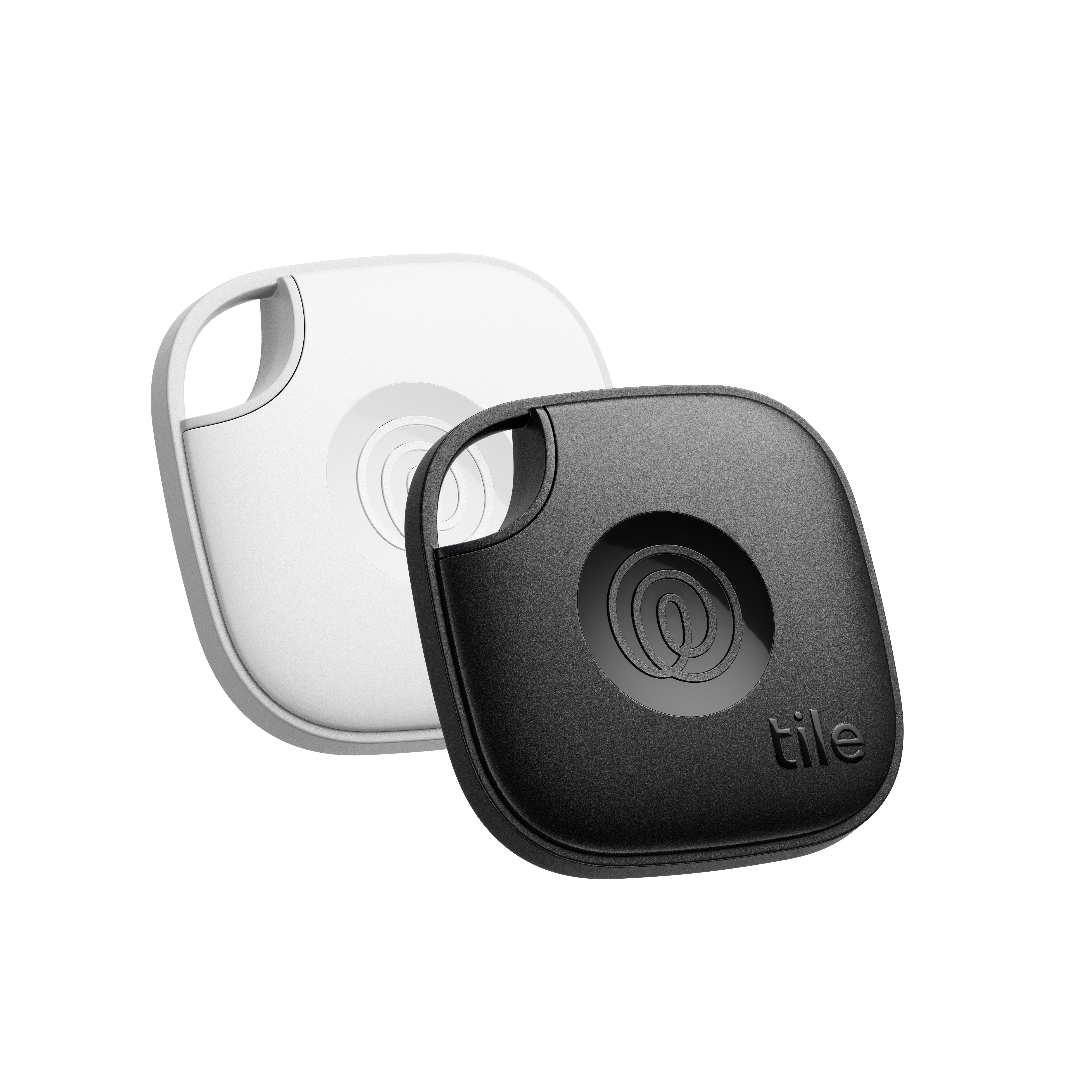
Modern and complex
Tile Mate (2024)
$20 $25 Save
$5The Tile Mate is a key chain-sized Bluetooth tracker that depends on the corporate’s well-established monitoring community to report its location, leveraging Tile and Life360 customers and Amazon Sidewalk units. It is available in enjoyable colours and in addition affords some superior options like one-touch emergency SOS, however you may have to go for a subscription to get probably the most out of it.
Execs- Established monitoring community
- Superior options and enjoyable colours
- Click on-to-activate SOS by way of Life360
Cons- Many options require a subscription
- No help for Apple or Google Discover My
- Disposable when battery dies
-
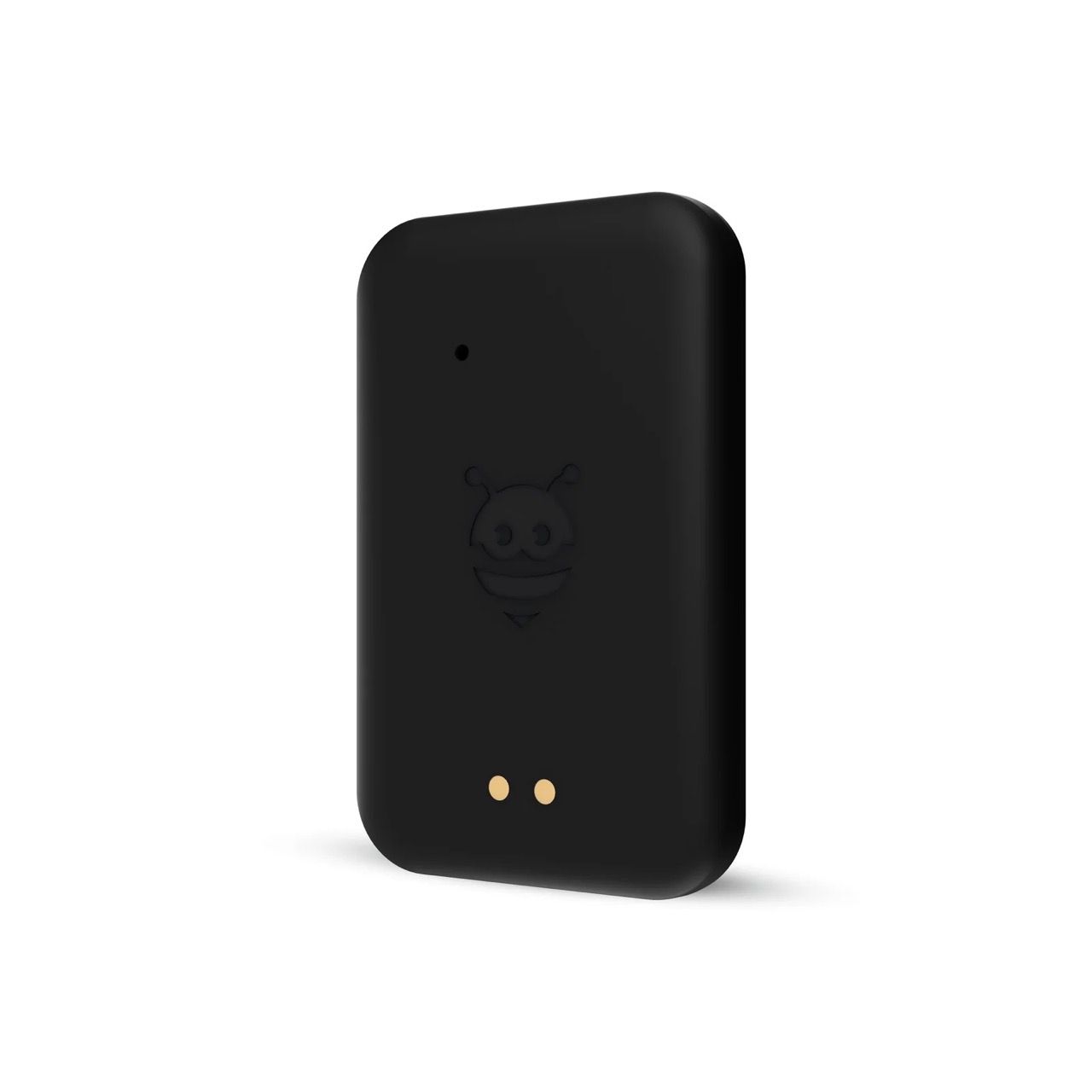
Sensible and rechargeable
Pebblebee Tag Common
$28 $35 Save
$7The Pebblebee Tab Common is a surprisingly small monitoring tag that works with Google’s and Apple’s Discover My, though it now not helps the corporate’s personal monitoring community. A chargeable battery supplies as much as 8 months on a single cost, making it extra environmentally pleasant than most different trackers.
Execs- Rechargeable battery with eight-month life
- Small and transportable
- IPX6 water resistance
Cons- No extremely wideband help
- Held again by Google’s Discover My community
- Obtainable solely in black


For years, Tile has been synonymous with Bluetooth monitoring tags. Launched in 2013, the corporate’s little devices shortly turned the preferred approach to preserve tabs in your stuff and discover misplaced or misplaced gadgets. They continue to be among the many finest good tags, even at present.
Nonetheless, the monitoring tag market exploded in 2021 when Apple launched its AirTags trackers and a Discover My community that might help different units. Immediately, one other firm with a billion extra units (and a trillion extra {dollars}) was giving Tile a run for its cash amongst iPhone homeowners. Now, Google has additionally entered the fray with its Discover My Gadget community, threatening to displace Tile’s community solely by urgent each Android smartphone into service.
Whereas Tile has held steadfastly to its monitoring community, its rivals have shortly moved to embrace Google’s Discover My Gadget community because it permits for higher attain and common compatibility. Amongst these is Pebblebee, which had its Tag for Android able to go solely weeks after Google’s announcement. Pebblebee’s monitoring units have been fashionable equipment for Apple’s Discover My community, making them a promising addition to the Google ecosystem. Nonetheless, are they sufficient to unseat Tile’s dominance? Let’s discover out.

Learn our Rating
By no means lose your treasured belongings once more with these good tags
Value, availability, and specs
A single Tile Mate tag sells for $25, with reductions obtainable in the event you purchase it in a two- or four-pack. They are often bought straight from Tile and the opposite regular retailers like Amazon, Greatest Purchase, Walmart, and extra. The batteries aren’t replaceable, however a single Tile Mate ought to last as long as three years earlier than that turns into an issue. Whereas the Tile Mate works as a primary tracker for no further price, you’ll have to issue within the worth of a subscription service to get every thing that tag affords. The tags can be found in lots of colours, from primary black and white to two-tone Navy Blaze, Aqua Lemon, Inexperienced Surf, and Pink Punch.
After providing a model of its tag for Apple’s Discover My community for the previous few years, Pebblebee launched an Android-specific model earlier this 12 months to work with Google’s nascent Discover My Gadget community. It’s since discontinued the “for Android” model in favor of the Pebblebee Tag Common, which works with Apple and Google units. The Pebblebee Tag Common sells for $35 straight from Pebblebee and could be discovered at retailers like Amazon and Greatest Purchase. It’s obtainable solely in black.

Learn our Overview
Overview: Tile’s revamped Mate reminds us why it is the reigning Android tracker
Plus, it is available in jazzy new colours

Learn our Overview
Overview: Pebblebee’s new Common trackers nonetheless aren’t proper for Android customers
Pebblebee has given up on its community
Design
Enjoyable and sensible

The Tile Mate has one of many extra whimsical designs we’ve seen amongst monitoring tags. That’s partly due to the corporate’s selection of enjoyable two-tone shade choices, however even in the event you choose your tag in primary black, it has a definite look that makes it really feel extra like a tag you’d put in your key ring or your baggage, full with an acceptable opening within the nook.
By comparability, the Pebblebee Tag is a extra utilitarian affair, a small rectangular brick with rounded edges, obtainable solely in black. It’s designed to stay onto one thing relatively than dangle from it and features a double-sided adhesive for that function. Nonetheless, there’s additionally a black silicone sleeve within the field that can be utilized for attachment to a belt, backpack, purse, or perhaps a canine collar. Pebblebee additionally makes a Clip with practically similar options for many who choose one thing extra akin to a key tag.
The Tile Mate is 37.6mm sq. and seven.4mm thick on the middle and weighs 8g. Whereas it isn’t practically as obvious from product photographs, the Pebblebee Tag is surprisingly smaller and lighter than the Tile Mate, measuring 40mm x 26mm x 4.5mm and solely 6.5 grams. It’s about as large as an SD card however longer and thicker.

Nonetheless, the 4.5mm thickness is spectacular, contemplating that the Pebblebee Tag packs in a chargeable battery and all of the circuitry required to cost it, with a pogo pin connector on the face for the included USB-C charger. The Tile Mate’s battery is sealed inside and isn’t replaceable.
The Tile Mate surpasses the Pebblebee Tag in the event you’re on the lookout for one thing that may survive out of doors adventures, because it contains a full IP68 ranking, which makes it immune to mud and immersion in 1.5 meters of water for as much as half-hour. The Pebblebee Tag solely has an IPX6 ranking, which the corporate says is meant to assist it “survive surprising splashes, spills, and showers,” however recommends in opposition to submerging the tag. That mentioned, the Tile Mate isn’t designed to work underwater; Tile says it’s designed to deal with “temporary submersions” and shouldn’t be used for actions like swimming. Nonetheless, both will work tremendous underwater in the event you seal them in a water-proof pouch.
Efficiency
David versus Goliath

The primary Tile tags hit the market in 2013, introducing the world to crowdsourced location monitoring. Tile wasn’t essentially the primary firm to give you this; it had many erstwhile rivals, but it surely managed to rise to the highest and grow to be a family title in Bluetooth monitoring tags.
Tile has a mature and well-established monitoring community, but it surely’s at all times suffered from one essential limitation: attain. Bluetooth monitoring tags depend on close by units like smartphones to detect them and report their location, however that solely works if these units know what to search for. The one practical means for Tile to construct a monitoring community was via a smartphone app, however that additionally meant that solely these operating the Tile app might find and report on close by Tile tags.
Whereas anybody can set up the Tile app, there’s little incentive to take action for many who don’t personal a Tile tag. As of 2021, Tile has offered slightly over 40 million trackers, though it’s unclear what number of of these are nonetheless lively. Many customers additionally purchase a couple of, which implies the variety of units operating the Tile app might be lower than half that.
In late 2021, Tile expanded its attain by becoming a member of Life360. This allowed Tile tags to be tracked by customers of the favored location-sharing app, including an estimated 70 million smartphones to the combo. Tile has additionally partnered with Amazon’s Sidewalk community to permit Echo units and Ring cameras in close by properties and companies to select up its monitoring tags and report their location.
Crowdsourcing on steroids

Nonetheless, even when Tile’s community has hit 100 million units, that pales in comparison with what Apple and Google can pull off. For the reason that two tech giants management their respective smartphone working programs, they will add location monitoring on the core, guaranteeing that just about each smartphone on the planet may also help report the situation of misplaced monitoring tags. Apple did this with the AirTag in 2021, Google adopted swimsuit earlier this 12 months, and producers like Pebblebee have been fast to get on board with each.
For Apple, that’s about 1.5 billion iPhones, though these have to be operating iOS 14.5 or later. Google’s Discover My Gadget community is doubtlessly rather more intensive for the reason that firm made the service retroactive to Android 9. In principle, there could possibly be properly over a billion smartphones prepared and capable of decide up the Pebblebee Tag and different Discover My Gadget-enabled trackers.

This is able to lead many to imagine that the Pebblebee Tag ought to fare higher at reuniting you with misplaced gadgets. In spite of everything, there’s a greater probability of it being within the vary of a tool operating Android 9 than one operating the Tile or Life360 apps. Sadly, the fact of this is a little more difficult.
That’s as a result of Google has hamstrung its Discover My Gadget community by being too cautious. Given the unhealthy rap Apple’s AirTags have acquired for being abused by stalkers and automotive thieves, Google has determined to play it protected and successfully dial down the precision of its community.
Whereas practically any Android smartphone can decide up a Pebblebee Tag (or every other Discover My Gadget-enabled tag), most gained’t report its location on their very own. The default setting on Android is to solely report tags present in “high-traffic areas,” which implies a tag will solely be reported when “a number of” units have detected its location. (Google declined to present us a selected quantity, but it surely’s clearly a couple of.)

This will increase privateness and reduces the chance {that a} tag could possibly be misused for stalking since its location gained’t be reported if a goal is alone. Nonetheless, it additionally means you’re much less more likely to discover your lacking tag. Even in a high traffic space, this setting leads to a really imprecise location since Google’s algorithm aggregates a number of studies over a number of minutes and even hours to find out an “common” location for the place the tag is likely to be. In testing the Pebblebee Tag, we discovered that it could possibly be an space of over 100m in diameter, even in a dense city neighborhood. That’s not useful while you’re uncertain which espresso store, restaurant, or retailer you will have left your bag, keys, or pockets at.
Each the unique Pebblebee Tag for Android and the brand new Pebblebee Common exhibited comparable issues as lately as November 2024, so it’s clear that Google’s Discover My Gadget community must mature a bit.
Satirically, which means that the Tile Mate is extra probably that will help you discover your misplaced gadgets. Solely a single Tile or Life360 person wants to return throughout it to report a reasonably correct location. Your mileage will differ relying on the place you reside, because it nonetheless relies on what number of Tile/Life360 customers there are in your space, however Tile’s monitoring tags stay fashionable amongst Android customers, they usually’ll probably proceed to take action till Google’s Discover My Gadget community grows up.
Superior options
There’s extra right here in the event you’re prepared to pay

Since becoming a member of Life360, Tile has moved to a partial subscription mannequin for its tags. The excellent news is {that a} subscription isn’t required to get primary monitoring capabilities, however you will need to subscribe if you’d like extra refined options like sharing and good alerts.
The Tile Premium plan prices $2.99 month-to-month or $29.99 yearly and supplies a 30-day tag location historical past, plus good alerts that may notify you when an merchandise is left behind and the power to share the situation of your Tile tags with family and friends. It additionally contains an prolonged guarantee. Within the U.S., Tile Premium additionally supplies as much as $100 of insurance coverage for any tagged misplaced gadgets that may’t be discovered by Tile, which could be prolonged to $1,000 of protection by choosing the $9.99/12 months Premium Shield plan.
Life360 members can even use a Tile Mate to ship an emergency SOS alert by urgent and holding a button on the tag. These could be despatched to household, associates, and different emergency contacts with no subscription, however you will need to pay for a Life360 Gold or Platinum subscription to request assist from 911 or different emergency dispatch companies mechanically.

The Pebblebee Tag is extra primary, but it surely has one benefit. Its location could be shared with family and friends with no subscription, as that’s a core characteristic of Google’s Discover My Gadget community. Sadly, it doesn’t but supply a left-behind characteristic. We anticipate Google to ultimately add that, as Apple’s AirTags and different iOS-compatible Discover My gadgets have had this functionality for some time. Pebblebee beforehand provided its personal app and monitoring community, however the brand new “Common” tag now not helps this, so that you’re restricted to the options obtainable on Apple’s and Google’s networks.
Word that neither the Tile Mate nor the Pebblebee Tag helps ultra-wideband (UWB). That characteristic remains to be distinctive to Apple’s AirTags and Samsung’s Galaxy Tags, which might information you to the sofa cushion your keys are hiding in. As a substitute, you can also make Tile’s and Pebblebee’s tags emit a sound — which will get fairly loud — after which zero in on them together with your ears.
Battery life
One is rechargeable, the opposite is disposable

The Tile Mate is absolutely sealed with a battery that the corporate says will final for as much as three years. After that, you’ll have to toss it out and purchase a brand new one at full worth, as the corporate now not affords its “reTile” recycling and change program. It’s not probably the most environmentally pleasant resolution, however three years is a good run, and Tile claims that every thing however the battery is recyclable via native e-waste packages. The trade-off right here is to go for the pricier and bigger Tile Professional, which has a replaceable battery however one you’ll have to swap out yearly.
Nonetheless, we now have to present kudos to Pebblebee, which is among the few corporations that makes its monitoring tags rechargeable. The Pebblebee Tag guarantees eight months between costs, and when it hits that, you’ll be capable to high it again up in 4 to five hours with the included USB-C charging cable that pops onto a pogo plug on the floor. That proprietary connection means you’ll wish to keep in mind the place you place the cable as a result of, since you may use it so sometimes, it’s possible you’ll lose observe of it. You possibly can monitor the Tag’s battery life within the corresponding app in your smartphone or by urgent the Pebblebee brand and checking what number of instances the LED pulses.
Which is best for you?

For years, Tile’s tags had been the one sport on the town. Whereas a number of others tried to compete by constructing their very own monitoring networks, solely Tile managed to achieve the essential mass of customers wanted to make sure that you can truly discover stuff with one in every of its tags hooked up. Even after Apple debuted its AirTags in 2021, Android homeowners might solely look on considerably wistfully on the new options obtainable and hope that Google would quickly rise to the event.
Sadly, Google has been too cautious in its preliminary try and construct out its huge crowdsourced monitoring community, leaving Tile with the benefit. Because of hooking up with Life360 and partnering with Amazon Sidewalk, the Tile community now has a strong attain, particularly in city areas. Apple’s AirTags nonetheless do considerably higher, however within the Android ecosystem, Tile stays the highest decide — at the least till Google ups its sport.

Nonetheless the champ
Tile Mate (2024)
Tile reigns supreme
$20 $25 Save
$5
Tile’s insistence on sticking with its personal monitoring community offers the Tile Mate a bonus over its rivals for now. Nonetheless, it additionally distinguishes itself by providing options that Google’s Discover My Gadget community cannot, reminiscent of notifying you while you’ve left one thing behind.
We’re optimistic that Google will do exactly that, and the good factor is that when it does, all of the tags that help Discover My Gadget at present ought to profit from the enhancements. In spite of everything, Google’s underlying know-how is sound; it’s the implementation that’s problematic, and that’s solely within the software program. Which means that in the event you’re prepared to reside with the present limitations of Google’s community, a Pebblebee Tag you purchase now ought to take full benefit of any enhancements Google makes to its Discover My Gadget community. It’s additionally price mentioning that it’s equally appropriate with Apple’s Discover My community, which implies you may nonetheless use it in the event you change platforms or hand it off to an iPhone-toting good friend or member of the family.

A number of potential
Pebblebee Tag Common
Ought to grow to be extra helpful with time
$28 $35 Save
$7
The Pebblebee Tag Common stands out amongst trackers by providing a chargeable battery, which is stunning contemplating its small measurement. The tracker is hampered by Google’s Discover My Gadget community proper now, however we anticipate that to enhance, and it really works nice with Apple units as an AirTag different.