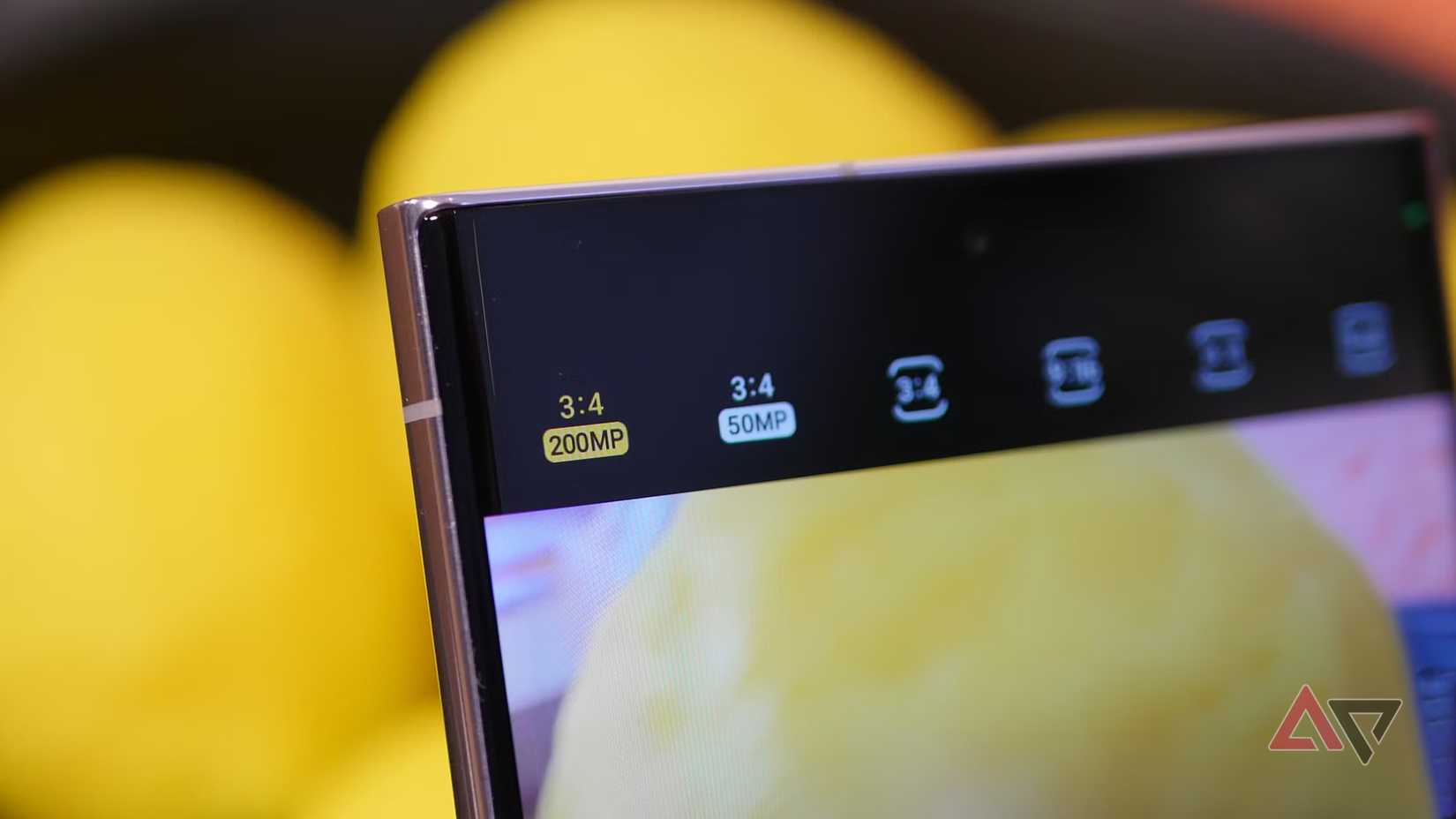
The megapixel race in smartphone cameras is considered one of client tech’s most steady advertising and marketing narratives. Each launch season brings one other wave of promoting throughout my desk.
This time the headline quantity is 200. Latest Android flagships from Samsung, Honor, Vivo, and Motorola characteristic 200-megapixel cameras.
It is simple to imagine larger means higher, and this leap will make telephone cameras indistinguishable from professional gear.
After years of testing telephones throughout the worth spectrum, I’ve discovered to look previous headline specs. I now not chase megapixel counts.
Small sensors, small pixels, and the true restrict of telephone cameras

The megapixel race hits the onerous limitation of smartphone sensor dimension. Cellphone sensors are a lot smaller than DSLR or mirrorless sensors.
As makers pack 12MP, 48MP, 108MP, or 200MP onto tiny sensors, every pixel (photosite) should shrink. This pixel crowding modifications how the sensor captures mild.
Bigger photosites acquire extra mild and generate a cleaner sign. Smaller photosites seize fewer photons and generate a weaker sign.
This weak sign should be electronically amplified in low-light situations to create a correctly uncovered picture.
Amplification provides digital noise, seen as grain or speckling, particularly in shadows and flat colours.
Extra mild in bigger sensors improves dynamic vary, which is the flexibility to seize element in a scene’s shiny highlights and darkish shadows.
That is why a DSLR with a big 16MP sensor can produce cleaner, richer pictures than a 200MP telephone.
Software program, not sensors, is the key behind nice telephone images

Cell pictures’s largest leap has been in software program. Cellphone cameras use small sensors that wrestle with noise and restricted dynamic vary, so engineers leaned on computational pictures to compensate.
As an alternative of treating a photograph as a single publicity, pioneers like Marc Levoy at Google handled it as knowledge to seize and refine.
The telephone takes a number of frames, aligns them, and makes use of algorithms to drag out element, scale back noise, and stability highlights and shadows.
The Google Pixel line grew to become the proof. It topped digital camera rankings with a modest 12MP sensor whereas rivals chased 48MP and 108MP.
The lesson is obvious. A well-tuned sensor paired with robust computational processing can outperform bigger, higher-megapixel {hardware} with out equally succesful software program.
200MP telephones actually offer you 12MP images

Pixel binning can also be proof that the megapixel race is marketing-driven. Engineers use it to offset the downsides of small, crowded pixels.
Pixel binning lets the picture sign processor (ISP) mix adjoining pixels into one bigger superpixel.
Frequent patterns are 2×2 (4→1, tetra), 3×3 (9→1, nona), and 4×4 (16→1). For instance, a 108MP sensor with 9-to-1 binning outputs 12MP by default (108/9=12).
Equally, many 200MP sensors use 16-to-1 binning to provide ~12.5MP pictures (200/16=12.5). Binning simulates the light-gathering of fewer, bigger pixels.
The superpixel boosts sensitivity and improves signal-to-noise by summing or averaging neighboring pixels.
The aim is not to ship 200MP images, however to make use of 200MP sensors to make higher 12MP pictures.
The cycle exhibits that extra pixels distract from the true aim, which must be higher pixels.
Instagram and TikTok form our notion of a telephone’s digital camera high quality

Digital camera specs are solely a part of the story. The person’s notion of digital camera high quality is formed not solely by the telephone’s {hardware}, however by your entire chain of software program it passes by.
Individuals share and think about most smartphone images on Instagram, TikTok, and Fb.
These providers deal with large each day uploads and should keep quick throughout billions of units and combined community speeds.
They do that by compressing pictures aggressively. One other bottleneck is how third-party apps are optimized for iOS versus Android.
Android {hardware} is extremely various. Hundreds of fashions from dozens of manufacturers combine totally different sensors, lenses, and picture processors.
For groups like Instagram or Snapchat, completely optimizing for each Android configuration is unrealistic, so many undertake a one-size-fits-all pipeline.
In contrast, Apple ships few iPhone fashions annually. That consistency lets builders tune apps to entry the digital camera stack effectively.
Consequently, images uploaded inside social apps typically look higher on an iPhone than from an Android telephone, even when the Android machine has a greater digital camera system.
The actual energy of your digital camera remains to be in your fingers
After all of the speak about sensors, software program, and social algorithms, it might probably really feel like picture high quality is out of your fingers. However that could not be farther from the reality.
Essentially the most highly effective characteristic of any digital camera is the particular person holding it. As an alternative of chasing the subsequent megapixel bump, deal with the fundamentals.
First, study to see mild. Gentle is the uncooked ingredient of each picture, and even the most effective sensor on this planet cannot save a photograph taken in dangerous mild.
At any time when doable, use pure mild. Smartphone sensors nonetheless wrestle indoors regardless of computation.
Second, grasp composition. A well-composed picture of a easy topic is much better than a chaotic picture from a $2,000 telephone.