Android flagships reached a brand new excessive this yr, delivering longer battery life, higher efficiency, and extra AI options than you’ll be able to depend.
With most main telephone launches of the yr accomplished for, the following wave of Android flagships will quickly hit the market, promising much more energy.
Nonetheless, I might wish to see upcoming Android flagships give attention to greater than uncooked efficiency. They need to pack actual usability upgrades to enhance the on a regular basis expertise.
Magnetic wi-fi charging
Time to completely undertake Qi 2

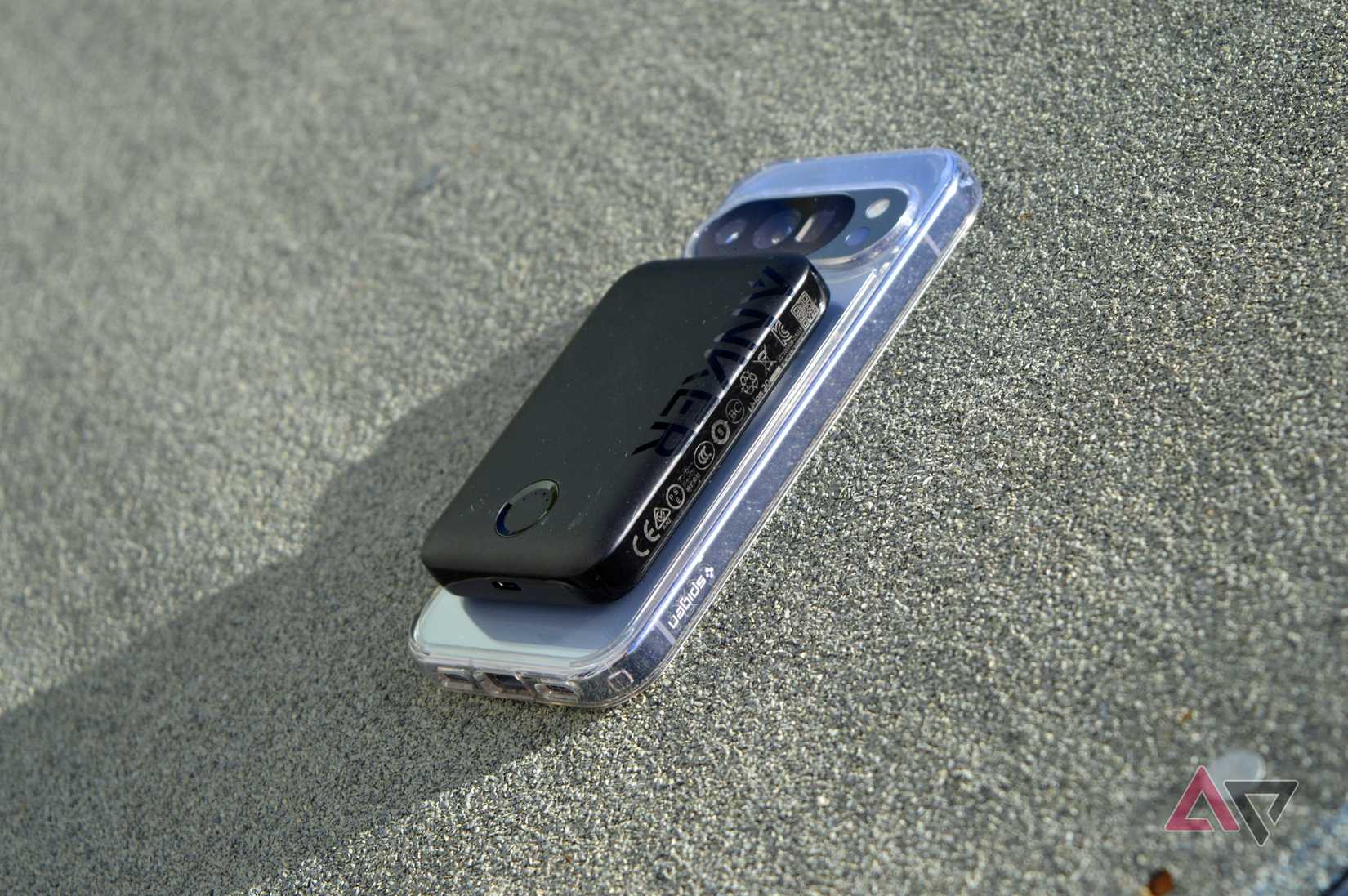
This yr, Google stood out as the one Android maker to completely embrace magnetic Qi2 wi-fi charging. Barring the Pixel 10, not one of the different main Android flagships shipped with built-in magnets and full Qi2 help.
Sure, the Galaxy S25 is Qi2 ‘Prepared,’ however that requires utilizing circumstances with magnets as a workaround.
From a wi-fi charging perspective, Qi2 does not introduce main technical enhancements.
What it does convey, although, is magnets. And that solves the largest ache level of wi-fi charging. It makes suitable gadgets snap into place mechanically, eliminating placement points.
Extra importantly, the built-in magnets unlock an entire ecosystem of equipment that may connect securely to the again of your telephone. This makes inserting the telephone on automobile or bike mounts, selfie stands, and different equipment much more handy.
After you begin utilizing a telephone with native Qi2 help and built-in magnets, there is no going again.
It is a disgrace that years after the iPhone 12 launched MagSafe and Qi2 went official, the Google Pixel 10 is the one main Android telephone to ship with native help for such a function.
For next-gen Android flagships, I hope to see native Qi2 magnetic wi-fi charging in-built — no case required.
Quick charging that simply works
Each wired and wi-fi

All main Android flagships ship with superfast wired charging. Whereas not as quick as its opponents, even Google and Samsung’s flagship telephones can pull 30W or greater energy over a wired connection.
The issue is that regardless that these telephones use USB-C as the usual connector, they depend on completely different charging protocols.
So, except you employ the suitable USB-C adapter along with your OnePlus 13, it will not cost at its peak 80W velocity. Worse, there is no assure that your Galaxy S25 Extremely will cost at 45W speeds with OnePlus’ SuperVooc charger.
It is the identical with wi-fi charging. The OnePlus 13 solely helps 50W wi-fi charging when paired with the model’s AIRVooC charger.
With different wi-fi charging pads, you’re restricted to 15W speeds. And no, you’ll be able to’t use the identical wi-fi charger to high up the Pixel 10 Professional XL at 25W. You want a Qi2.2 charger for that.
Outdoors the US, issues get much more complicated once you add gadgets from manufacturers like Xiaomi, Vivo, Oppo, and Huawei. All of them ship with their very own charging normal, and if you happen to use an everyday USB-C PPS charger, they are going to be restricted to 30–40W energy.
2026 Android flagships should do higher on this regard, supporting no less than 50W or greater wired charging speeds with an ordinary USB-C PPS charger. On the wi-fi facet, adopting Qi2.2 ought to remove compatibility points whereas boosting the baseline velocity to 25W.
Higher telephoto cameras
Greater is best

Smartphone cameras can now zoom farther than ever, with Samsung and Google’s flagship telephones that includes a 5x telephoto shooter. And with the assistance of AI, they’ll seize usable photographs at as much as 100x decision in some circumstances.
Whereas all this will likely sound spectacular, the telephoto cameras on right now’s Extremely flagships nonetheless aren’t massive sufficient to ship persistently nice outcomes.
Their tiny sensors restrict low-light efficiency and element seize, and at longer zoom ranges, picture high quality shortly falls aside exterior excellent lighting.
That is extra of a US drawback, because the Chinese language Extremely flagships pack significantly massive telephoto cameras. For instance, the Xiaomi 15 Extremely makes use of the identical 200MP sensor for its 100mm telephoto that the Galaxy S25 Extremely depends on for its main digital camera.
The photographs beneath make it clear simply how a lot of a distinction this setup can ship.
I get {that a} 200MP sensor would make the digital camera bump large. However Samsung and Google might take a cue from the Oppo Discover X8 Extremely for his or her 2026 flagships and use a 1/1.56-inch sensor with a wider aperture for his or her zoom cameras.
This could significantly enhance picture high quality and make the telephoto digital camera much more enjoyable and versatile to make use of.
As for Samsung, it ought to simply think about ditching the 3x 10MP telephoto digital camera from the Galaxy S26 Extremely subsequent yr. As an alternative, it ought to make the most of the house saved to slot in bigger main and 5x shooters.
Sadly, rumors counsel this may not occur, with Samsung as an alternative upgrading the 10MP sensor to a 12MP one for a decision enhance.
Anti-reflective display screen
An enormous usability improve

The shows on flagship Android telephones have improved by leaps and bounds in recent times.
Decide up the OnePlus 13, Google Pixel 10 Professional, Galaxy S25 Extremely, and even final yr’s Pixel 9 Professional XL, and you’ll battle to search out points with their super-bright screens.
But Samsung’s Extremely flagships nonetheless reign supreme with one main show edge: their anti-reflective cowl glass. It helps minimize down on reflections drastically, making the display screen simpler to see in brilliant mild and boosting total usability.
Hopefully, in 2026, extra Android flagships will comply with Samsung’s lead and produce this underrated function to the mainstream.
Apple has already joined the bandwagon with the iPhone 17 lineup and its Ceramic Protect 2 cowl glass. Though its anti-reflective coating just isn’t as sturdy as Samsung’s, it nonetheless makes an enormous distinction in day by day use.
Here is hoping next-gen Android telephones additionally embrace this strategy, and anti-reflective cowl glass goes mainstream subsequent yr.
Versatile selfie digital camera
Time to go broad

Though vlogging and selfies have turn out to be on a regular basis telephone habits, Android makers have not given entrance cameras the identical consideration as rear ones.
Aside from the Pixels, which function a wide-angle selfie digital camera, most Android flagships appear to place little thought into the entrance digital camera.
Apple flipped the script this yr by equipping the iPhone 17 with a much bigger, sq. selfie shooter.
Apart from picture high quality enhancements, it introduced one main usability win: letting you are taking selfies in panorama mode with out awkwardly turning the telephone.
I do not count on 2026 Android flagships to repeat the iPhone’s sq. selfie digital camera so quickly. Nonetheless, Samsung, OnePlus, and others might no less than take a web page from Google and add a wide-angle entrance lens — making group selfies and content material creation much less of a trouble.
For comparability, the Galaxy S25 Extremely’s entrance digital camera provides a 26mm area of view, whereas the Pixel 10 Professional XL’s 42MP entrance shooter packs a 17mm ultrawide lens.
On paper, an ultrawide selfie lens may not appear to be an enormous deal. However it can present an enormous usability enhance in day by day life.
2026 Android flagships may very well be the very best but
Over the past couple of years, flagship Android telephones have targeted on extra than simply efficiency.
With the baseline efficiency now being greater than quick sufficient, corporations have been innovating in different areas to distinguish themselves from the competitors.
The 2026 wave of Android flagships ought to elevate the bar even greater, and any telephone that nails these 5 fronts will lastly supply essentially the most full expertise but.