I’ve at all times been conscious that my telephone collects knowledge, together with location, app utilization, and search historical past.
Nonetheless, after I began digging by means of app permissions, I seen that half the apps on my telephone had entry to issues they actually didn’t want. I’d granted them ages in the past and forgotten all about it.
However after one too many personalised advertisements hit a bit of too near residence, I made a decision to take management.
In only a few days, I took a number of easy steps that considerably decreased the quantity of knowledge my telephone revealed about me. The perfect half was that I didn’t have to surrender any of the apps or performance I depend on every single day.
Audit app permissions on Android
The simple privateness hack


The very first thing I did was a full app permission audit.
Many Android customers typically faucet Permit with out contemplating the implications when an app requests entry to their location, microphone, or digicam.
Nonetheless, I found that lots of the apps I trusted didn’t want these permissions to operate.
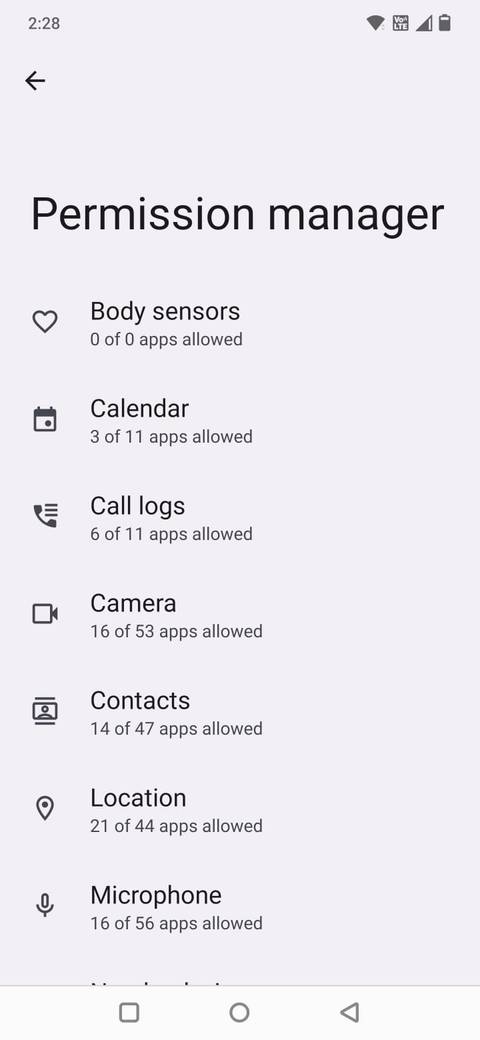
I went by means of every permission by going to Settings > Privateness > Permission supervisor. I used to be shocked that dozens of apps I barely used had entry to my contacts, information, or digicam.
I revoked all of the pointless app permissions from the Permission supervisor menu. For delicate permissions, I switched to Ask each time, because it prevents background entry with out disabling options solely.
Pruning app permissions means fewer privateness dangers and fewer apps operating within the background.
Clear up previous and unused apps
My telephone feels lighter now


After tightening permissions, the following step was coping with the apps I wasn’t utilizing. Unused apps could be a silent privateness danger.
Even for those who haven’t opened them in months, they’ll nonetheless maintain previous permissions, cached knowledge, and entry tokens. Some proceed to sync within the background or ship analytics knowledge lengthy after you’ve stopped caring about them.
I opened Settings > Apps > App administration and uninstalled apps I didn’t want.
It wasn’t nearly releasing up storage. Fewer apps meant fewer replace notifications, fewer permissions to watch, and fewer background duties quietly operating within the shadows.
Most significantly, cleansing up unused apps is a one-time effort that continues to repay.
Flip off advert personalization
Break the suggestions loop


Even for those who’ve by no means thought a lot about it, Android assigns your account an promoting ID, which lets apps and advertisers construct a profile round your habits.
That profile consists of what you seek for, which apps you employ, what you purchase, and even how you employ your telephone.
To decide out of advert personalization, I went to Settings > Privateness > Superior > Adverts. Below Advert privateness, I toggled off Permit advert subjects and Permit app-suggested advertisements. I additionally reset my promoting ID.
When it’s off, Google stops utilizing your exercise throughout apps and companies to tailor advertisements particularly to you.
It doesn’t imply you’ll cease seeing advertisements solely; they’ll simply turn into extra generic.
Nonetheless, it breaks the suggestions loop that lets advertisers monitor your habits throughout the online and in apps.
Locking down browser and search privateness
Modify just a few settings to scale back monitoring

After I’d cleaned up my telephone and shut off background monitoring, I turned my consideration to Chrome and Google Search.
I opened the Chrome app and navigated to Settings > Privateness and safety. Below Advert privateness, I toggled off Advert subjects and Website-suggested advertisements.
For just a few websites that felt too ad-heavy or intrusive, I additionally began utilizing Courageous as a secondary browser. It blocks trackers and advertisements by default, with out requiring plug-ins or modifications.
Having Courageous alongside Chrome gave me the perfect of each worlds: Chrome for comfort and Courageous for privacy-heavy looking.
Two-factor authentication and safe accounts
Including a second degree of safety

After tightening permissions and cleansing up previous apps, I spotted that every one the privateness settings on the planet don’t matter if somebody can nonetheless get into your accounts.
My closing step was to make sure that even when a snooping app or phishing try slipped by means of, it couldn’t do a lot injury. The best, but only means to do this is with two-factor authentication (2FA).
I began with my Google account, because it’s the spine of my Android telephone.
On my telephone browser, I went to myaccount.google.com, chosen Safety > 2-Step Verification, and tapped Activate 2-Step Verification.
Subsequent, I activated 2FA for my banking, e-mail, social media, and cloud storage apps.
Whereas it’s a bit of tedious to arrange throughout a number of companies, it’s a one-time effort that shuts down some of the frequent safety dangers: unauthorized entry from reused or leaked passwords.
Privateness doesn’t should be difficult
Your telephone already has highly effective, built-in instruments to guard your privateness. I didn’t require any particular safety apps or a brand new privacy-focused gadget.
In only a few days after adjusting my telephone’s settings, I minimized background monitoring, restricted intrusive apps, and regained management over my private knowledge.