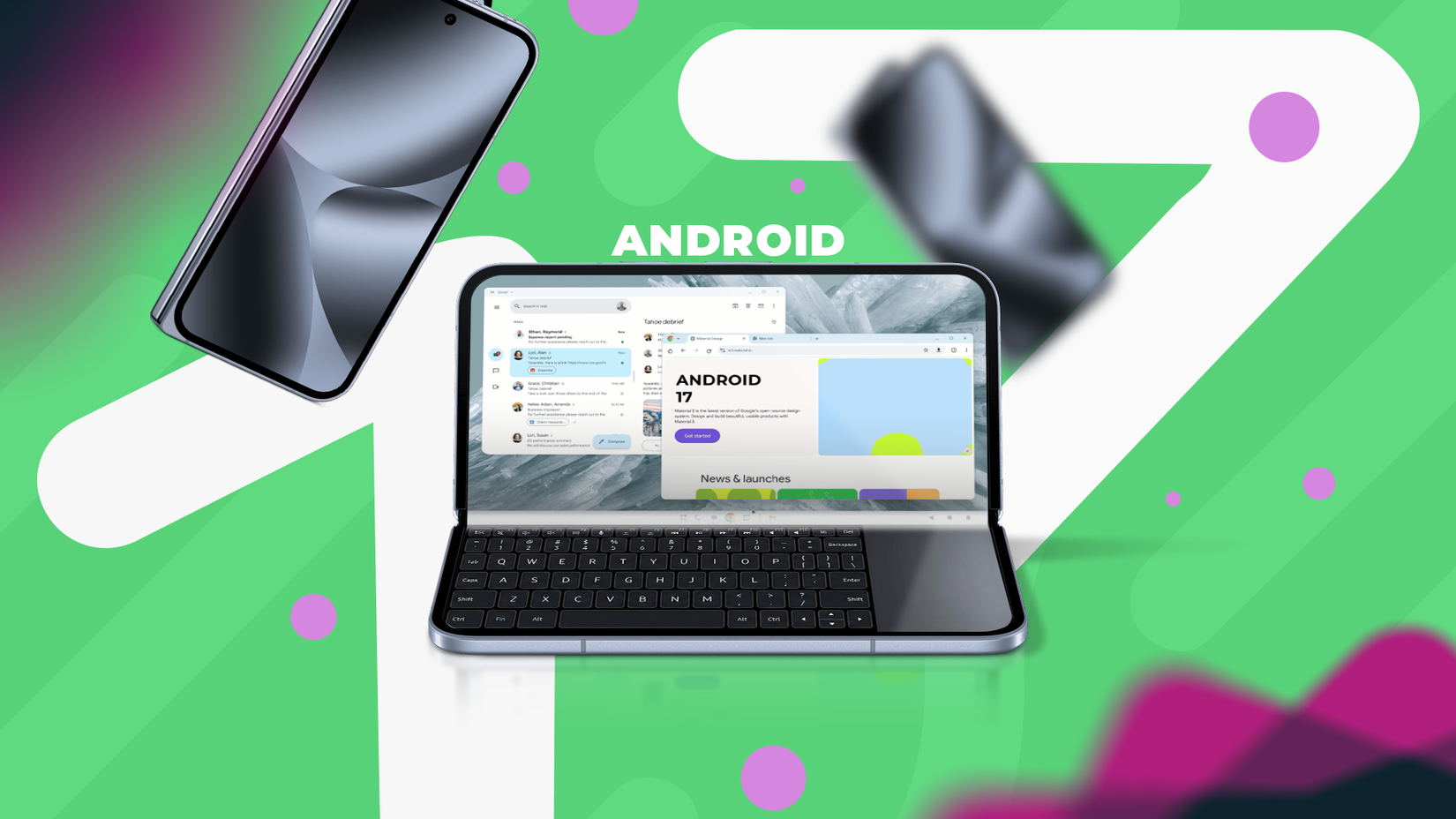
On February 13, 2026, Google gave us our first take a look at what we are able to count on from Android 17 when it launches later this 12 months.
Android 17 Beta 1 is accessible now, and Google has uploaded a weblog submit for builders explaining what they need to give attention to whereas updating their apps.
However in contrast to earlier Android updates, Android 17 has some main implications for builders that can profit customers on all Android platforms.
I will level out a number of the different adjustments in Android 17 Beta 1 which can be useful to our telephones, however I wish to spotlight a heading in Google’s weblog submit that does not sound attention-grabbing at first: Orientation and resizability restrictions.
With Android laptops proper across the nook, these restrictions will make a big distinction.
Google is laying the muse for a cohesive Android expertise
Apps must work equally nicely throughout all platforms
In Google’s Android 17 Beta 1 weblog submit, it states that:
Android 17 (API stage 37) removes the developer opt-out for orientation and resizability restrictions on giant display units (sw > 600 dp).
The technical a part of this alteration entails 5 attributes and APIs that might be ignored when an app runs on a big display or when an app is categorized as a recreation.
In the event you use an Android pill, foldable telephone, or Chromebook, you might have possible found some apps which can be locked to a single orientation.
These are usually apps which can be hardly ever used exterior of our telephones (Authy, Lyft, and Venmo are good examples), however some apps are simply poorly optimized for giant screens.
This conduct is most irritating on an Android foldable, the place it prevents you from utilizing it like a standard Android telephone.
Some units, like Samsung’s Galaxy Z Fold collection, permit the person to power orientation adjustments, however the ensuing stretch of the app’s UI can result in ugly or awkward interfaces.
All that is about to alter, as Google has acknowledged that:
Apps focusing on Android 17 should guarantee compatibility with the phase-out of manifest attributes and runtime APIs launched in Android 16.
Nevertheless, customers can select to choose out of those restrictions by way of their gadget’s side ratio settings.
This modification is more likely to trigger a scramble amongst builders as they replace their apps to accommodate new orientations, however in the long run, these restrictions will considerably enhance the expertise of utilizing Android apps on foldables, tablets, and laptops.
Android 17 units the stage for Android laptops
Aluminium OS is an thrilling improvement

At first, Google’s restrictions appear unnecessarily fussy. Sure, it is an issue that many apps do not rotate on giant screens, however it’s by no means been widespread sufficient to power this alteration earlier.
Nevertheless, Aluminum OS wants Android apps to work seamlessly in panorama mode.
Aluminium OS is the upcoming Android-based working system that’s set to exchange ChromeOS.
Particulars are scarce, however Google unintentionally confirmed off a display recording on the Chromium Situation Tracker, which gave us our first good take a look at what Aluminium OS will appear like.
On the floor, it seems to be like Aluminium OS is Android optimized for desktop screens, which is probably going why Google is forcing builders to adapt to those new restrictions forward of time.
Google seems to be growing an Aluminum OS to compete with Apple’s macOS.
A job itemizing that gave us a few of our earliest hints about what to anticipate acknowledged that the crew engaged on ChromeOS and Aluminium OS can also be engaged on “a brand new give attention to Premium units and experiences.”
ChromeOS, helpful as it’s, is simply too clunky to realize this imaginative and prescient. I often use a Chromebook whereas I am touring, and I will be the primary to confess that there are some apps I will not contact attributable to compatibility points.
If Aluminium OS launches when main Android apps observe these restrictions, then a really unified Android ecosystem might be a actuality.
With out these restrictions, Aluminium OS will not really feel just like the premium expertise Google is outwardly constructing it to be.
Nevertheless, Android 17 will even deliver important enhancements to our telephones.
There are additionally loads of enhancements on the way in which for Android telephones
Large screens don’t get all of the love

A helpful facet impact of those restrictions is that there might be fewer interruptions while you rotate an app.
In the event you’ve ever needed to repeat actions while you rotate your Android gadget, you know the way irritating this may be.
There’ll nonetheless be interruptions while you rotate an app, however not for actions that sometimes don’t require a UI change.
Different adjustments embrace a UI refresh for the Pixel Launcher’s search bar, various shortcuts for the AI Mode button within the search bar, and the flexibility to cover the At a Look widget.
There are additionally extra compact menus within the Settings app, a brand new quantity overflow button, and a flipped brightness icon.
Android 17 Beta 1 marks a brand new period for beta testing. Google is abandoning Developer Previews in favor of a steady Canary channel, which implies we can’t have to attend as lengthy to check new options.
Android 17 seems to be to be a significant step ahead for the Android ecosystem
I am enthusiastic about Aluminium OS regardless of Google stating that it is going to be constructed with AI at its core. ChromeOS is beneficial, however clunky, and I am eager to see a brand new competitor to Home windows and macOS.
As I exploit Android telephones, it is smart to have a desktop that additionally runs Android, however my enthusiasm will dissipate swiftly if it finally ends up being a reskinned ChromeOS.
However, I am comfortable to see that Google is setting these restrictions for builders forward of time. It is a essential step to make sure the success of Android laptops.