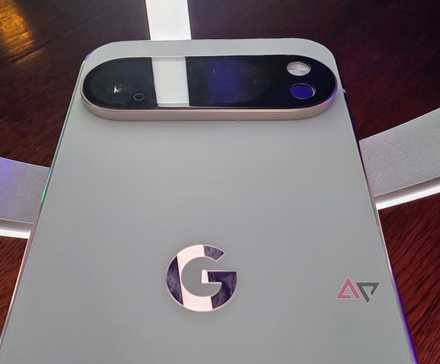
The Google Pixel has lengthy been hailed because the king of point-and-shoot pictures, however after years of protecting the ecosystem, I’ve realized that relying solely on Auto mode is leaving a number of the {hardware}’s finest potential on the desk.
Whereas Google’s computational pictures does the heavy lifting, just a few buried toggles and handbook changes could be the distinction between an ideal snapshot and a professional-grade picture.
After diving deep into the most recent updates and fine-tuning my very own gadget, I’ve discovered a particular set of configuration adjustments that improved my outcomes.

I’ve used dozens of Android telephones, however these Pixel options nonetheless completely amaze me
These add-ons make Pixel particular
Allow RAW photographs


For a very long time, I simply let the Pixel do its factor, however if you wish to take your modifying severely, the JPEG-only pictures don’t lower it.
To flip the change, I head into the Digital camera app, faucet the Settings gear within the lower-left nook, and allow RAW/JPEG management.
Now, after I’m taking pictures, I can shortly faucet the Settings icon within the viewfinder and select to avoid wasting a RAW model alongside a regular JPEG. It’s a easy toggle that doubles the utility of each shutter press.
Google’s JPEG processing is world-class, however it’s a completed product. After I tried to drag particulars out of deep shadow or get well a sky that was only a bit too vivid, the JPEG would begin to break.
By enabling RAM, I’m capturing the uncompressed information straight from the sensor. It usually seems boring and flat in comparison with the processed JPEG, however it’s a goldmine of data.
I did this as a result of I needed the liberty to resolve precisely how the shadows ought to look and the precision to regulate my white stability with out ruining the picture high quality.
Allow grid kind


Typically I have a look at my pictures on a bigger display and notice my horizons have been barely tilted or that my topic was awkwardly centered in a method that felt off. That’s why the 3×3 grid has develop into the one setting I by no means flip off.
It’s a fast repair that lives proper in the principle interface. I simply faucet the Settings icon within the lower-left nook of the digicam app, choose Extra settings, and scroll all the way down to the Composition part. Below Grid kind, I choose 3×3.
Instantly, the viewfinder is split into 9 equal rectangles that give me a transparent visible map earlier than I ever press the shutter.
As a substitute of placing my topic dead-center — which may usually look static — I now align the fascinating a part of my photograph. General, I ended taking snapshots and began really composing my photographs.
Arrange Fast Faucet to launch the digicam


There’s nothing extra irritating than lacking an ideal, fleeting second.
Whereas the double-press of the ability button is a traditional shortcut, I’ve discovered that the Fast Faucet gesture on the again of the Pixel is the true camera-ready secret.
You possibly can head into Settings > System > Gestures > Fast Faucet to start out actions > Open app, and faucet the Settings gear subsequent to it to decide on the Digital camera.
Now, all it takes is 2 agency faucets on the again of my telephone, and the viewfinder is open earlier than I’ve even absolutely raised the gadget to my face.
By the point I’ve pulled my Pixel out of my pocket, these two faucets have already bypassed the lock display and fired up the sensor.
It shaves off these essential one or two seconds that normally make the distinction between capturing a reminiscence and capturing a blur of movement.
Tweak brightness, shadows, and white stability


One of the crucial highly effective issues in regards to the Pixel digicam is that you just don’t have to attend till you’re within the modifying room to start out growing your photograph.
For a very long time, I let the AI resolve precisely how vivid a scene must be or how heat the sunshine regarded. However I’ve since moved to utilizing handbook sliders proper within the viewfinder.
It’s fairly intuitive, however straightforward to overlook if you’re used to only tapping to focus. After I’m framing a shot, I faucet my topic, and three sliders pop up on the fitting aspect of the display.
I can slide them up or down with my thumb to see the adjustments mirrored in real-time earlier than I even take the photograph.

Change on speech enhancement


One of many irritating issues about recording video outdoor is when a wonderfully good clip is ruined by visitors noise, wind, or a loud air conditioner within the background.
Whereas the Pixel has all the time had respectable mics, I’ve began counting on the Speech Enhancement toggle to verify my voice really cuts by way of the chaos.
There’s a limitation, although. This function works solely when you find yourself taking pictures at 24 or 30 fps. In case you have bumped your setting as much as 60 fps for that smoother movement, the choice will probably be greyed out.
The proper Pixel digicam setup
General, the Pixel’s computational energy is unimaginable, however it shouldn’t restrict your creativity.
By taking 5 minutes to step past the default ‘point-and-shoot’ mentality and adjusting these key settings, you’re shifting from letting the software program make each resolution to really directing the shot your self.
Whether or not it’s the added flexibility of RAW recordsdata or the precision of the framing grids, these small tweaks add as much as a extra succesful digicam in your pocket.
So, what are you ready for? Give these adjustments a strive in your subsequent outing and see the outcomes your self. If you are at it, don’t overlook to tweak these Pixel UI settings.